Preparing Your Furnace for Houston's Cold Snaps
A pre-season furnace checklist built for Houston's short, sharp winters - including the carbon monoxide risk most homeowners overlook.
June 3, 2026 · 2 min read
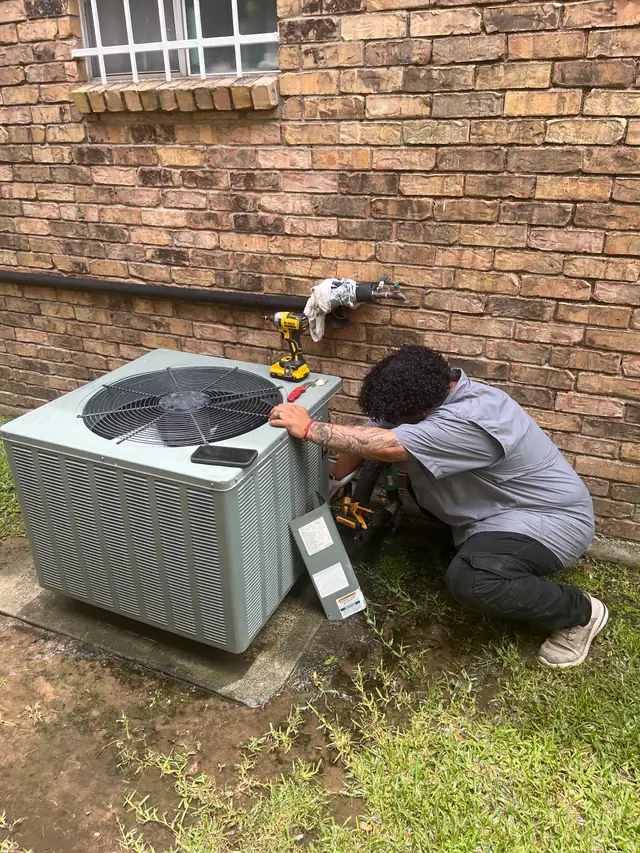
Houston winters are deceptive. You can go weeks in the 70s and then wake up to a cold front that drops overnight lows into the 20s. The furnace that sat unused all summer suddenly has to work hard - and that's exactly when you find out it has a problem.
A quick pre-season check-in keeps you from making emergency calls on a 30-degree night when every HVAC company in the area is already slammed.
The pre-season furnace checklist
- Replace the air filter - a clogged filter is the most common cause of furnace problems and it takes two minutes to fix
- Turn the thermostat to Heat and set it a few degrees above room temperature to confirm the furnace ignites and blows warm air
- Listen for any banging, rattling, or squealing when the burner fires - those sounds weren't there when the system was working correctly
- Check the area around the furnace for anything stored too close - clearance matters for safety and airflow
- Look at the pilot light flame if you have an older furnace - it should burn blue, not yellow or orange
- Make sure all supply and return vents in the house are open and unblocked
- Test your carbon monoxide detector and replace the battery if it's been a year
The cracked heat exchanger risk
This is the one that homeowners underestimate most. The heat exchanger is the component that separates combustion gases from the air your family breathes. Over time - especially in systems that have been running for 15 or more years - heat exchangers can develop hairline cracks. A cracked exchanger can leak carbon monoxide into your living space without triggering any symptoms until levels get dangerously high.
You can't see a cracked heat exchanger during a visual inspection - it requires combustion analysis equipment and a trained eye. If your system is older than 12 years, a professional tune-up before the heating season makes sense. It's not about finding something wrong; it's about knowing for certain that you're safe.
Heat pump vs. furnace - which Houston homes have which
A lot of newer Houston homes have heat pumps rather than gas furnaces. Heat pumps move heat rather than generate it - they're efficient when temperatures are mild, but struggle when it drops below freezing. Most heat pump systems have electric resistance backup strips for exactly this reason. If your system seems to be running constantly during a cold snap but can't keep up, check whether the auxiliary heat is engaging - if it's not, that's a service call.
Gas furnaces don't have the same limitation in cold temps but do require annual combustion checks to confirm the burners are clean and the heat exchanger is intact.
Don't wait until the front hits
Scheduling a furnace tune-up in October or early November means you're ahead of the rush. Champion and Nash has been serving Spring and Greater Houston for over 40 years - our maintenance plans include heating and cooling check-ins so you're not scrambling when the weather turns. Call (713) 360-0564 to get on the schedule before the cold fronts arrive.
Champion and Nash — (713) 360-0564
Call (713) 360-0564More articles
When to Repair vs. Replace Your AC Unit
A clear decision framework so you don't overpay to keep a dying system alive - or replace one that had years left.
Why Your Drain Keeps Clogging (and What Actually Fixes It)
Recurring clogs aren't bad luck - they're a symptom, and the cure depends on what's actually causing them.